How to Clean Countertop Ice Maker: Easy Step-by-Step Cleaning Guide
Acountertop ice makerIt is easy to make ice at home. However, if not cleaned regularly, dirt, mineral buildup, water stains, and bad odors can build up inside. This can reduce the quality of the ice and prevent the machine from working properly.
Many people only clean the water reservoir, but to properly clean an ice maker,
you also need to clean the water reservoir, ice basket, ice scoop, interior, and water system.
The good news is that most countertop ice makers can be easily cleaned at home. It doesn’t always require a special cleaner. With clean water, a soft cloth, and the right cleaning method, you can do a lot of work.
In this guide how to clean countertop ice makerThe entire process of making ice will be shown in a simple way. At the same time, whether vinegar can be used or not, how to remove mineral buildup, how to reduce bad smell,
and how often the ice maker should be cleaned will also be explained.
Why Should You Clean a Countertop Ice Maker?
Countertop ice makers work directly with water, so over time, minerals can build up inside them. This problem can occur more quickly if the water contains too many minerals.
If water remains inside the machine for a long time, bacteria or other types of dirt can accumulate. Even if you use the ice basket and ice scoop regularly, dirt can accumulate there.
Ice made from a dirty ice maker may not taste or smell good. In some cases, the ice maker may make ice slowly or produce small ice cubes.
Regular cleaning keeps the inside of the machine clean. This makes it easier to maintain good ice quality and keeps the machine in good condition.
How Often Should You Clean a Countertop Ice Maker?
How often you need to clean it depends on usage and water quality.
If you use your ice maker every day, it’s a good idea to do a basic cleaning regularly. In many cases, cleaning the outside and removable parts once a week is enough.
A deeper cleaning can usually be done every few weeks, but if your ice maker’s user manual has a specific cleaning schedule, it’s best to follow it.
If the machine smells bad, the ice has an unusual taste, white buildup is visible inside,
or the machine seems dirty, then it should be cleaned ahead of schedule.
What You Need Before Cleaning
Before you start cleaning, keep a few simple things handy.
You may need:
- Clean water
- Soft cloth
- Soft sponge
- Small soft brush
- Mild dish soap
- Clean towel
- White vinegar, if the manufacturer allows it
Do not use a hard brush or rough sponge. These can scratch the plastic surface or interior.
Check the user manual before using any strong chemicals. Not all ice makers use the same materials or cleaning systems.
How to Clean Countertop Ice Maker Step by Step
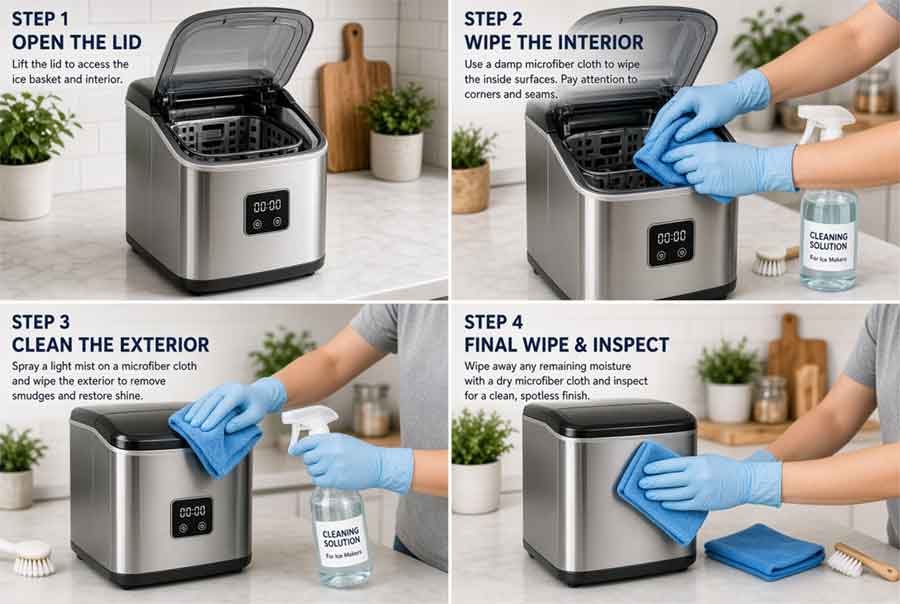
Now let’s start the actual cleaning process. If you follow the steps below step by step, it will be easy to clean your countertop ice maker thoroughly.
Unplug the Ice Maker
First, turn off the ice maker and unplug the power plug.
Do not attempt to clean the inside of the machine with your hands while it is running. It is much safer to clean it when the power connection is off.
If the machine has been running for a while, wait a while for the inside to come to normal temperature.
Remove the Ice Basket
Then take out the ice basket.
If there is ice inside the basket, remove it. Do not clean with old ice.
Check the ice basket for dirt, water marks, or other buildup.
Drain the Water Reservoir
Completely drain the old water from the water reservoir.
It is not a good idea to keep old water and add new water. Especially if the machine is not used for a few days, it is better to drain the water from the reservoir and use fresh water.
When draining, follow the drain method given in the machine’s manual.
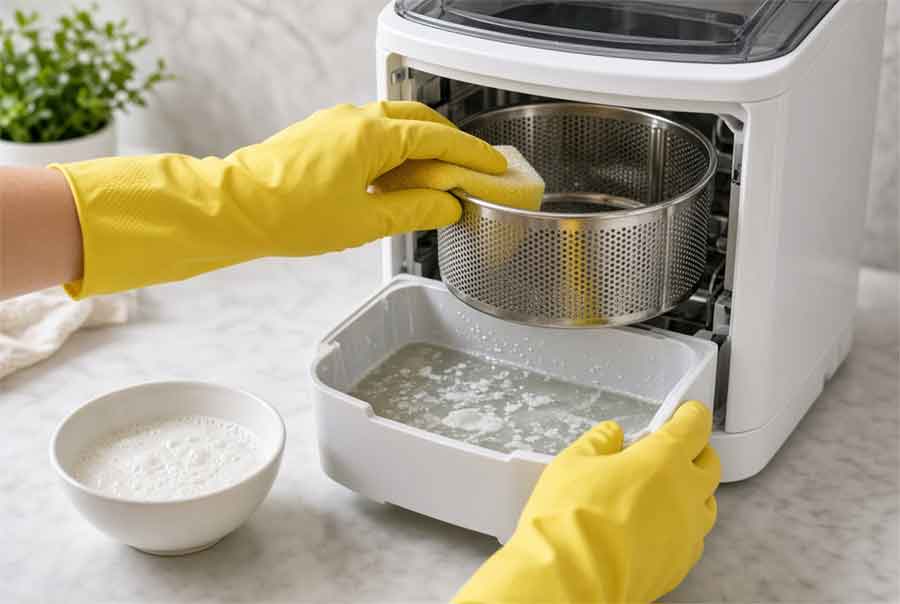
Wash the Removable Parts
Separately clean removable parts like the ice basket and ice scoop.
They can generally be washed with mild dish soap and clean water. However, if the manufacturer recommends against using a dishwasher, do not put them in the dishwasher.
Clean the Water Reservoir
The water reservoir is one of the most important parts of an ice maker.
Clean the inside walls of the reservoir using a soft cloth or soft sponge.
If white marks or mineral buildup appear inside the reservoir, clean them slowly.
Do not scrape the mineral with any sharp object. This may cause surface damage.
Clean the Inside of the Ice Maker
The inside of the machine also needs to be cleaned.
Dampen a clean, soft cloth with a little water and wipe down the accessible surfaces inside.
Look carefully at areas where water or dirt may have accumulated.
However, do not pour water on the machine’s electrical parts or in areas where the manufacturer has prohibited the use of water.
Clean the Ice-Making Parts
The parts inside the ice maker that are used to make ice also need to be kept clean.
If there is mineral buildup, ice may not form properly.
Use a soft cloth or manufacturer-approved cleaning method. Do not rub too hard.
If a part is not ready to be opened for cleaning, do not force it open.
Clean the Water Lines and Pump Area
In some countertop ice makers, water is pumped from a reservoir to the ice-making area via a pump.
If minerals or dirt accumulate in this water system, it can cause problems with the water moving properly.
Clean the parts that are user-accessible and that the manufacturer allows for cleaning.
Before removing the pump or internal parts, check the manual first, as improper removal may damage the machine.
Remove Mineral Buildup
Calcium and other minerals in water can create a white coating inside the machine over time.
This white buildup can usually be seen in water reservoirs, water paths, or ice-making areas.
Minor buildup can be reduced with regular cleaning. For more buildup, it is best to use the manufacturer’s recommended descaling method.
Clean the Ice Scoop
Ice scoops are often forgotten.
When you scoop ice, dirt from your hands or other dirt from the kitchen can get on the scoop.
So wash the scoop regularly with soap and clean water.
Rinse thoroughly and then dry.
Rinse Everything Properly
It is very important to rinse all parts thoroughly after cleaning.
Especially if you use soap or vinegar, make sure there is no residue.
If any of the cleaning solution remains inside the machine, it may cause an off-flavor or taste in the next batch of ice.
Therefore, it may be necessary to rinse multiple times with clean water.
Dry the Ice Maker
When cleaning is finished, dry the accessible parts of the machine.
Wipe off the water with a clean towel and leave the machine open for some time to dry out the moisture inside.
Leaving the machine turned off for a long time in a wet state can cause unwanted smells or moisture-related problems.
Run a Cleaning Cycle
If your countertop ice makerself-cleaningorcleaning cycleIf there is an option,
you can use it according to the manufacturer’s instructions.
The cleaning cycle can help clean the water path inside the machine.
However, even if there is a cleaning cycle, removable parts like the ice basket and scoop should be cleaned separately.
Make a Fresh Batch of Ice
It is best not to use the first batch of ice after cleaning is complete, especially if cleaning solution or vinegar has been used.
Run the machine with fresh water and discard the first batch of ice.
Then make new ice with fresh water again.
This reduces the chance of cleaning residue remaining inside.
How to Clean Countertop Ice Maker With Vinegar
Manyhow to clean countertop ice maker with vinegarWant to know.
White vinegar can help reduce some types of mineral buildup, but vinegar is not recommended for all ice makers.
So first check the manufacturer’s manual or cleaning instructions.
If vinegar is allowed, diluted vinegar is usually used. Concentrated vinegar should not be poured directly into the machine unless the manufacturer says so.
After cleaning, rinse thoroughly with clean water.
Do not make and use ice until the vinegar smell is completely gone.
How to Clean Countertop Ice Maker Without Vinegar
If you don’t want to use vinegar, you can use clean water, a soft cloth, a soft sponge, and mild soap for general cleaning.
If mineral buildup is excessive,
the manufacturer’s recommended ice maker cleaner or descaling product can be used.
The most important thing here is to follow the product’s instructions.
Not all types of cleaners are safe for all machines.
How to Remove Mold From a Countertop Ice Maker
If you see mold or dark spots inside the ice maker, it needs to be cleaned with care.
First unplug the machine. Then remove the ice, old water, and removable parts.
Use a manufacturer-approved cleaning method in areas where mold is visible.
Accessible areas can be cleaned gently with a soft brush.
After cleaning, rinse all parts thoroughly and dry the entire machine.
If the mold is in a place you can’t reach, or the mold returns even after cleaning, it’s best to stop using the machine and seek support from the manufacturer.
How to Remove White Mineral Buildup
White buildup is usually caused by minerals in water.
This problem can be more common if you use hard water.
First, try to reduce buildup with normal cleaning. If that doesn’t work, use a manufacturer-approved descaling method.
Also check the manual to see if vinegar can be used.
Do not forcefully remove mineral buildup with a knife or metal object. This may damage the surface or internal parts of the machine.
How to Get Rid of Bad Smell From an Ice Maker
There can be several reasons why a bad smell comes from the ice maker.
Old water, dirty water reservoir, ice basket, cleaning residue, or internal buildup may be the cause.
First, drain the old water. Then clean the reservoir, basket, and scoop.
Remove accessible areas inside the machine.
After cleaning, run a few cycles using fresh water and discard the first ice.
If the smell persists even after cleaning, there may be a problem with the internal water system or another part.
Can You Use Dish Soap to Clean a Countertop Ice Maker?
In many cases, it is okay to use mild dish soap to clean removable parts such as the ice basket or scoop.
But before using soap inside the machine, you should check the manufacturer’s instructions.
If you use soap, you need to rinse it very well with clean water.
If there is soap residue, the next ice cream may have a smell or taste.
Can You Use Bleach to Clean a Countertop Ice Maker?
Bleach should not be used on its own.
Some cleaning systems may have specific sanitizer usage guidelines,
but not all countertop ice makers are bleach-safe.
Using bleach incorrectly can damage the machine’s materials and leave residue.
So if the manufacturer does not explicitly instruct on the use of bleach, it is safe not to use it.
Common Mistakes When Cleaning an Ice Maker
Many times, small mistakes are made while cleaning. These can cause problems with the machine.
Do not unplug the machine:The inside should not be cleaned with the power connected.
Using too much water:It is not advisable to put water near electrical parts.
Using strong chemicals:Do not use strong cleaners unless approved by the manufacturer.
Using a rough brush:This may cause surface scratches.
Not rinsing the cleaning solution properly:This may cause the smell or taste of the ice to deteriorate.
Leaving old water:It is best to completely drain the old water during cleaning.
Using a dirty ice scoop:Scoop also needs to be cleaned regularly.
Manual ignore:The design and cleaning method of every ice maker is not the same.
How to Keep Your Countertop Ice Maker Clean
Deep cleaning is not the end of the story. It’s a good idea to create some simple habits to keep your machine clean.
After each use, check to see if the ice basket is too dirty.
If you do not use the machine for a long time, empty the water reservoir.
Use clean and suitable water if possible.
Keep the area around the ice maker clean so that dust does not accumulate near the air vents.
Do not place anything on or next to the machine that blocks airflow.
Keep a regular cleaning schedule so that mineral buildup can be cleaned before it becomes excessive.
Signs Your Ice Maker Needs Cleaning
There are some signs that will tell you that it’s time to clean the ice maker.
For example:
- The smell of Ice has changed.
- The taste of ice is unusual.
- Water reservoir looks dirty.
- White mineral buildup is visible
- Ice basket sticky বা dirty
- The machine is making ice more slowly than before.
- Ice is forming small or abnormally
- Bad smell coming from the machine
- Visible dirt or dark spots are visible inside.
If these symptoms appear, it is best to clean.
How to Deep Clean a Countertop Ice Maker
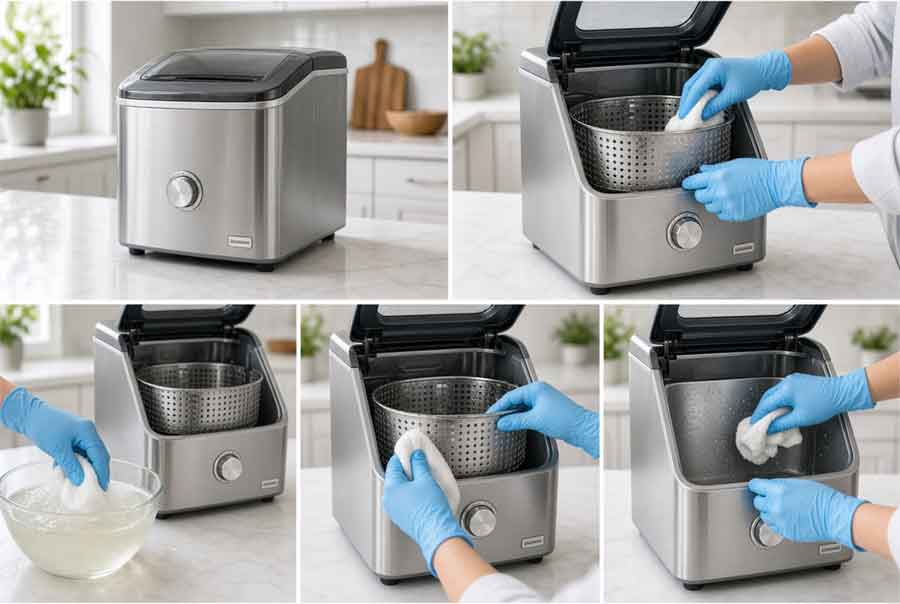
During deep cleaning, just wiping the outside won’t do.
First, unplug the machine and remove all old ice and water.
Then take out the ice basket and scoop and clean them.
Clean the water reservoir and parts of the accessible water path according to
the manufacturer’s instructions.
If there is mineral buildup, use the recommended descaling method.
Clean the accessible surfaces inside the machine with a soft cloth.
Then rinse all parts with clean water.
Finally, dry the machine and run a few cycles with fresh water.
It’s best to throw away the ice from the first batch.
When Should You Stop Using the Ice Maker?
If you see electrical wires, damaged plastic, leaking water, burning smell,
or any other serious problem while cleaning, stop using the machine.
Do not attempt to repair electrical parts yourself if you do not have experience in the task.
If the machine is within warranty, it is better to seek support from the manufacturer.
A minor cleaning problem is not the same as an internal mechanical or electrical problem,
so if serious damage is found, professional help should be sought.
Final Thoughts
How to clean countertop ice maker It’s not hard to know. Regular and proper cleaning reduces the chances of dirt, old water, bad smells,
and mineral buildup accumulating inside the machine.
First, unplug the machine. Then remove the ice basket and old water. Clean the removable parts and clean the water reservoir thoroughly. Then, clean the interior,
water system, and mineral buildup according to the manufacturer’s instructions.
The most important thing is to rinse the machine thoroughly after cleaning. Make sure there is no soap, vinegar, or cleaning solution residue left inside.
Another thing to keep in mind—not every countertop ice maker is designed the same. So it’s best to check the user manual before removing any parts or using any chemicals.
In addition to regular cleaning, using fresh water, keeping the machine dry, and keeping the air vents clean will make it easier to use your countertop ice maker for a long time.
Frequently Asked Questions
How Often Should I Clean My Countertop Ice Maker?
For regular use, it is best to do basic cleaning regularly and deeper cleaning can be done every few weeks. However, follow the manufacturer’s instructions for the exact schedule.
Can Dirty Water Affect Ice Quality?
Yes. Dirty or old water can cause the taste and smell of ice to deteriorate. So it is better to use fresh, suitable water in the reservoir.
Can Hard Water Cause Problems?
Minerals from hard water can create a white buildup inside the machine. Over time, this can affect water flow and ice-making performance.
Can I Put the Ice Basket in the Dishwasher?
Not all ice baskets are dishwasher-safe, so check the product manual before using them in the dishwasher.
Can I Clean the Ice Maker While It Is Running?
No. The machine should be turned off and the power unplugged before starting cleaning.
Why Does My Ice Maker Smell Bad After Cleaning?
The smell may remain if the cleaning solution is not rinsed properly. Additionally, if there is buildup in the water reservoir, water line, or other internal parts, the smell may return.
Why Is There White Stuff Inside My Ice Maker?
This is usually due to mineral buildup in the water. This type of buildup is more common if you use hard water.
Can Vinegar Damage an Ice Maker?
Not all machines are suitable for vinegar. Therefore, vinegar should not be used without following the manufacturer’s instructions.
Can I Use Regular Tap Water?
Some ice makers can use tap water. However, poor water quality can lead to increased mineral buildup. Check your machine’s manual for the recommended water type.
Should I Throw Away the First Ice After Cleaning?
Yes, especially if you use vinegar or any cleaning solution, it’s best to throw away the first batch of ice. Then make new ice with fresh water.
Can Mold Grow Inside a Countertop Ice Maker?
Yes. Prolonged exposure to moisture, old water, or dirt can lead to mold or similar buildup. That’s why regular cleaning is important.
How Do I Know If My Ice Maker Is Really Clean?
The water reservoir, ice basket, scoop, and accessible internal areas should be clean and residue-free. There should be no bad smells, visible dirt, or mineral buildup.
Does Cleaning Help an Ice Maker Make Ice Faster?
If performance is reduced due to dirt or mineral buildup,
cleaning can sometimes help restore the machine’s normal performance. However, not all slow ice-making problems are caused by cleaning.
Should I Leave Water Inside the Ice Maker?
If you do not use the machine regularly, it is not a good idea to leave old water in the water reservoir. Follow the manufacturer’s storage instructions before turning off the machine.
Do I Need to Clean the Outside Too?
Yes. Dust and dirt build up on the outside can make the machine look dirty and can also cause airflow problems if there are air vents. The outside can be cleaned with a soft, slightly damp cloth.
How Long Does It Take to Clean a Countertop Ice Maker?
Basic cleaning usually doesn’t take long. However, deep cleaning, descaling, and rinsing may take longer. Also allow time to thoroughly rinse and dry the machine after cleaning.
Can Cleaning Fix a Countertop Ice Maker That Is Not Making Ice?
In some cases, it can. If the problem is caused by mineral buildup,
a dirty water system, or blocked airflow, cleaning can help. But if the cooling system, pump, fan, or electrical parts are damaged, cleaning alone may not be enough.