Introduction
A countertop ice maker It is a small machine that can make ice quickly in a small space. Although it may look and function like a regular refrigerator freezer, its working method is slightly different.
You just need to use the machine. water reservoir You have to add water and turn on the power. Then the machine itself takes the water, cools it and makes ice, and the ice that is made ice basket Submitted to.
This entire process is done in a few small steps. The water pump, cooling system, evaporator, fan, sensors, and control system work together to produce ice.
In this article how does a countertop ice maker work It will be explained in a very simple step by step manner. You will also learn about the important parts of the machine, how long it takes to make ice, what the function of the refrigerant is, and why sometimes small or wet ice is made.
How Does a Countertop Ice Maker Work?
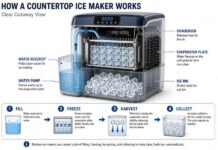
The operation of a countertop ice maker begins with the water reservoir.
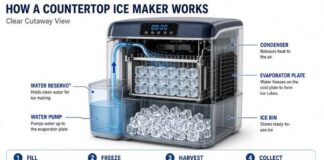
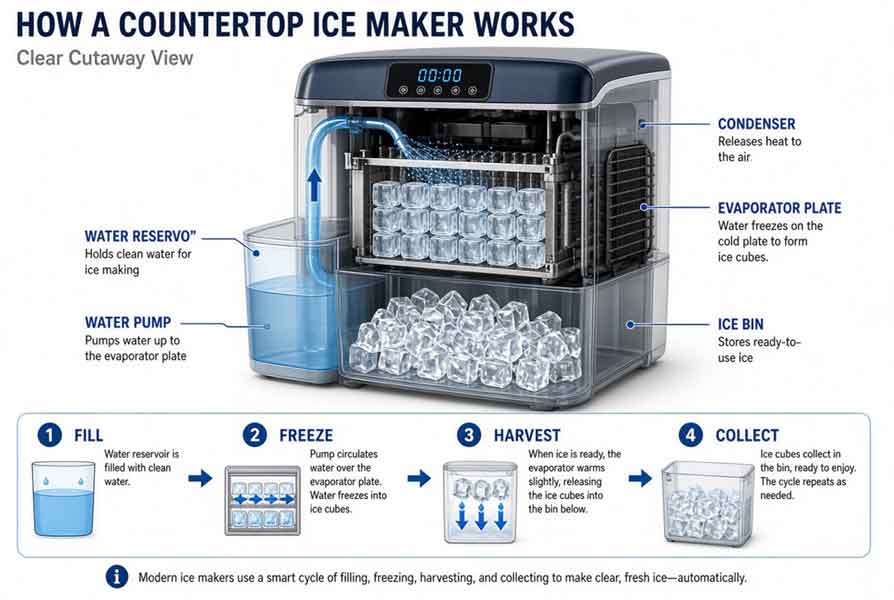
First, you need to add water to the reservoir. After turning on the machine, a small water pump sends water from the reservoir to the ice-making area.
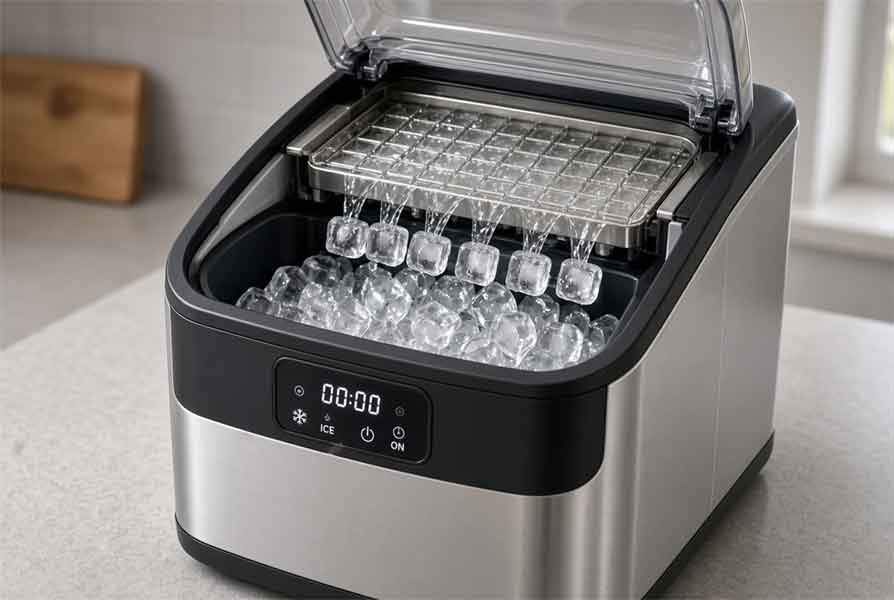
The cooling system then cools that part down very quickly. When the water comes into contact with a metal surface or metal freezing rods inside the ice maker, the water slowly freezes to form ice.
When the ice reaches the required size, the machine stops the freezing process and separates the ice from the freezing surface. It then falls into the ice basket.
The machine can continue the same process with new water until the basket is full.
Simply put:
Water → Pump → Cooling → Freezing → Ice → Ice Basket
This cycle is the main function of a countertop ice maker.
Main Parts of a Countertop Ice Maker
There may be many small parts inside a countertop ice maker, but a few parts are the most important for making ice.
Water Reservoir
Water reservoir This is where you put the water to make ice.
The reservoir can be small or large depending on the capacity of the machine. If the water level is too low, the machine may usually stop making ice.
It is important to keep clean water in the reservoir. Using old or dirty water can cause the ice to smell or taste bad and can cause mineral buildup inside.
Water Pump
Water pump It takes water from the reservoir and sends it to the ice-making area.
If the pump is not working properly, water will not reach the inside of the machine. Then the machine may not make ice even if it is turned on.
Similar problems can occur if there is a blockage in the pump’s water flow.
Evaporator
Evaporator An important part of the cooling system.
The evaporator of the ice maker becomes very cold. When water comes into contact with this cold surface or freezing rods, it starts to freeze.
Simply put, the evaporator is the part where the main task of cooling water and making ice takes place.
Cooling System
Cooling system Freezing water creates the cold needed to make ice.
It usually contains parts like a compressor, refrigerant, condenser, and evaporator.
One part of the system removes heat and the other part keeps the freezing area cool. This continuous cooling causes the water to turn into ice.
Condenser
Condenser Helps to remove heat from the cooling system.
When the machine is running, not only does the water inside cool down; heat is also generated during the cooling process. If that heat is not removed, the machine will not be able to cool properly.
For this reason, the condenser needs good airflow.
Fan
Fan Helps to remove heat from inside the machine.
The cooling system can work well if the fan and air vents are working properly.
If the air vent is blocked with dust or there is very little space around the machine, heat may not be able to escape.
Ice Basket
Ice made ice basket is deposited in.
When the basket is full, the machine’s sensor senses that there is no more ice left. Many machines then automatically stop the ice-making process.
Ice Sensor
Ice sensor Helps detect the level or position of ice inside the basket.
This allows the machine to understand when the basket is full.
If ice is stuck in front of the sensor or the sensor is dirty, the machine may incorrectly think the basket is full.
Control Panel
The machine can be turned on or off through the control panel.
Some models have options like ice size selection, self-cleaning, and warning indicators.
However, features may vary depending on the model.
Step-by-Step: How Does a Countertop Ice Maker work?
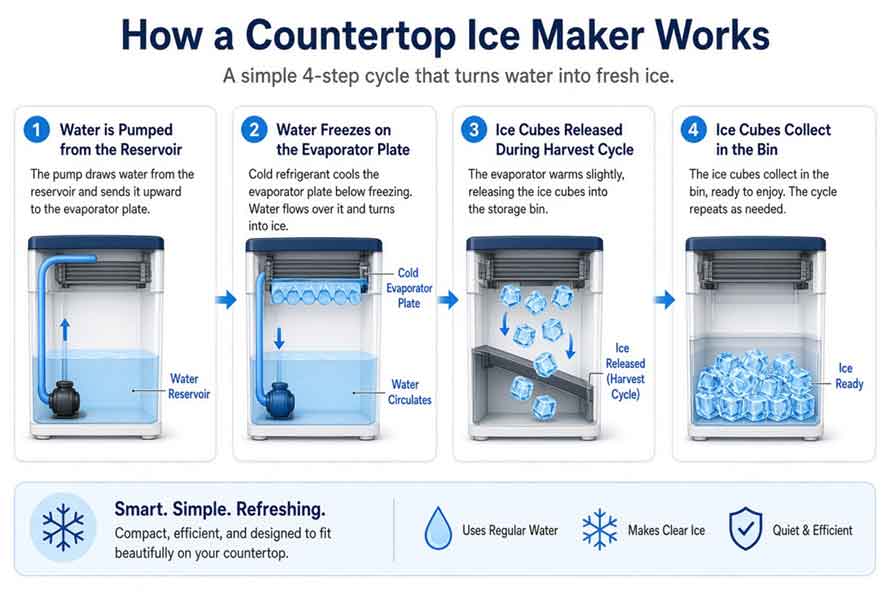
Now let’s see the whole process in a very simple way.
Step 1: Add Water
First, you need to add water to the water reservoir.
The amount of water to add depends on the design of the machine. If the reservoir is at the maximum line, you should not add more water.
Step 2: Turn On the Machine
After adding water, when you turn on the machine’s power, its control system starts working.
The machine can check basic information like water level and ice basket condition.
If everything is OK, the ice-making cycle begins.
Step 3: Pump Moves the Water
Then the water pump takes water from the reservoir.
The pump sends that water to the ice-making area. In some models, the water flows over freezing rods or cold metal surfaces.
Step 4: Cooling Begins
Now the cooling system starts to cool the freezing area.
The compressor helps circulate refrigerant within the refrigeration system.
As a result, the evaporator becomes very cold and conditions are created for the water to freeze and form ice.
Step 5: Water Freezes
When water comes into contact with a very cold surface, it slowly freezes.
Some countertop ice makers have ice formed around metal rods, while other designs may have ice formed on a cold surface.
The shape and size of the ice depends on the design of the machine.
Step 6: Ice Reaches the Right Size
The machine can use various sensors or temperature-based controls when making ice.
When the ice reaches the required size or freezing condition, the machine goes into the harvesting stage.
How a sensor or control system works may vary depending on the model.
Step 7: Ice Drops Into the Basket
Once the ice is made, the machine separates it from the freezing surface.
Then the ice falls into the basket below.
This stage is generally harvesting It is said.
Step 8: The Cycle Repeats
The machine takes in water again and makes new ice until the basket is full.
In this way, the same cycle continues over and over again.
The machine usually stops or pauses ice-making when the basket is full.
How Long Does a Countertop Ice Maker Take to Make Ice?
Countertop ice makers generally make ice faster than traditional freezers.
Many machines can take anywhere from a few minutes to 20–30 minutes to make the first batch of ice. The exact time depends on the model, ice size, water temperature, and room temperature.
The first batch may take a little longer because the machine first has to bring the cooling system to the required temperature.
Subsequent cycles may be relatively quick.
It is best to check the information in the product manual to find out how long your machine will make ice.
How Does a Countertop Ice Maker Know When the Ice Is Ready?
The machine has a control system and sensors inside that help control the ice-making process.
Some models can tell when the ice is ready by looking at the temperature or freezing conditions.
Some machine designs have ice sensors and other controls working together.
When the machine thinks the ice is ready, it finishes the freezing stage and sends the ice to the ice basket.
However, the exact system may vary depending on the manufacturer and model.
How Does a Countertop Ice Maker Keep Making Ice?
Once there is enough water in the water reservoir and space in the ice basket, the machine can continue the automatic cycle.
After a cycle is complete, the machine takes in water again.
Then the cooling and freezing process begins again.
In this way, the machine repeatedly makes ice until:
- The water level is very low.
- The ice basket is full.
- The machine is turned off.
- An error occurs.
Some models have an automatic shutoff feature.
Why Does a Countertop Ice Maker Need Airflow?
Airflow is very important for a countertop ice maker.
The cooling system generates heat while cooling the water. That heat has to be removed from the machine.
Fans and air vents help with this task.
If the machine’s air vents are blocked, heat can build up. This makes it difficult for the cooling system to work and can slow down the speed of ice making.
Therefore, the ice maker should be placed in a place where there is adequate airflow around it.
Does a Countertop Ice Maker Use Refrigerant?
Many countertop ice makers use a refrigeration system and contain refrigerant.
Refrigerant is an important part of the cooling system. It helps to circulate and transfer heat within the system.
Simply put, the cooling system keeps the freezing area cool by removing the necessary heat from the water.
In this process, the compressor, condenser, evaporator, and refrigerant work together.
However, not all portable ice-making devices are designed the same, so you should check the manufacturer’s information for your specific model.
Does a Countertop Ice Maker Keep the Ice Frozen?
This is an important issue.
The main function of a countertop ice maker is Making ice Do not keep ice frozen for a long time.
The ice basket on many countertop models is not an insulated freezing compartment like the freezer in a refrigerator.
So the ice in the basket can melt over time.
Melted ice water can be returned to the water reservoir in some models. Other models may have a separate drainage system.
If you want to keep ice frozen for many hours or days, a freezer may be more suitable.
How Does a Countertop Ice Maker Get Rid of Melted Ice?
When the ice in the ice basket melts, water is formed.
Depending on the design of the machine, this water may return to the reservoir or may need to be drained.
Some portable ice makers can recycle melted water and use it to make new ice.
For this reason, it is important to keep the water and internal parts of the water reservoir clean.
It’s best to check the manual to see how your machine handles melted water.
What Type of Water Should You Use in a Countertop Ice Maker?
Suitable and clean water should be used for countertop ice makers.
Many machines can use tap water. However, if tap water is high in minerals, mineral buildup can build up inside the machine over time.
Filtered water can help reduce mineral buildup in some cases, but it’s best to check the machine’s manual for recommendations on what type of water to use.
Distilled water is not required for all models.
The most important thing is to use water that matches the manufacturer’s instructions.
Why Does a Countertop Ice Maker Make Different Types of Ice?
Not all countertop ice makers make the same type of ice.
Some machines make small hollow or bullet-shaped ice. Other models can make other shapes.
The shape of the ice mainly depends on the design of the evaporator and the freezing process.
Some machines also give you the option to select the size of the ice.
So it’s normal for the ice from one machine to not be the same as the ice from another machine.
What Affects Countertop Ice Maker Performance?
How quickly and well an ice maker works depends on a few factors.
Room Temperature
If the room is too hot, it may be difficult for the cooling system to remove heat.
This may increase the ice making time.
Water Temperature
Very cold water and room-temperature water may not behave the same way.
Water temperature can have some effect on ice-making speed.
Airflow
If there is a blockage in front of the air vents, it may cause problems with the machine’s heat escaping.
Water Quality
Hard water can cause mineral buildup inside the machine.
Machine Cleanliness
Dirty reservoir, water path or mineral buildup can cause problems with water flow and normal operation.
Ice Basket Capacity
The machine may stop making new ice if the basket is full.
Machine Placement
Cooling performance may be affected if the machine is too close to a heat source.
Why Is My Countertop Ice Maker Not Making Ice?
Sometimes the machine may not make ice even though it is running.
Some common reasons for this are:
- Water reservoir is low.
- Ice basket full
- Water flow blocked
- Machine dirty
- Air vents blocked
- The room is too hot.
- Fan is not working properly.
- Water pump problem
- Cooling system problems
- Internal sensor is giving wrong signal
It’s best to check simple things like water level, basket, and airflow first.
Why Is My Countertop Ice Maker Making Small Ice?
If the machine is making too little ice, there could be a few reasons.
Cooling performance may decrease if the room temperature is high.
Even if the water flow is low, the size of the ice can change.
Mineral buildup can cause problems with water flow.
It is normal for some machines to produce small amounts of ice because that is their design.
So first check the manual for your machine’s normal ice size.
Why Is My Countertop Ice Maker Making Soft or Wet Ice?
It may be normal for the ice to be slightly wet when it falls into the ice basket.
However, if the ice repeatedly becomes too soft and does not freeze properly, there may be a problem with the freezing process.
High room temperature, poor airflow, or a problem with the cooling system may be the cause.
The ice in the ice basket can melt even after a long time because many countertop ice makers do not keep the ice frozen like freezers.
How Does the Self-Cleaning Function Work?
In some countertop ice makers self-cleaning There is an option.
This mode can help circulate water within the water system inside the machine.
Some models use a cleaning cycle water pump to run the cleaning process within the internal water path.
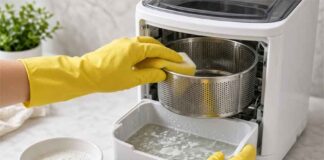
However, even with the self-cleaning feature, the ice basket, scoop, and accessible surfaces may need to be cleaned manually.
Your machine’s self-cleaning process may vary depending on the model.
How to Keep a Countertop Ice Maker Working Properly
There are a few simple habits you can follow to keep your machine in good condition.
First, clean the water reservoir regularly.
Secondly, keep the machine’s air vents clean from dust.
Third, place the ice maker in a place where there is good airflow.
Fourth, do not leave old water in the reservoir if it has not been used for a long time.
Fifth, if mineral buildup occurs, use the manufacturer’s recommended cleaning method.
These small tasks can help maintain the normal operation of the machine.
Common Problems With Countertop Ice Makers
Countertop ice makers are generally easy to use, but some common problems can occur.
Not Making Ice
It could be due to water, airflow, pump or cooling system.
Slow Ice Production
It may be due to high room temperature, blocked airflow, or poor cooling performance.
Small Ice
It may be related to water flow, temperature, or machine design.
Soft Ice
This could be due to the ice not freezing completely or the ice in the basket melting.
Water Leakage
It may be due to problems with the drain system, water reservoir, or internal water path.
Unusual Noise
If a fan, pump, or compressor makes an unusual noise other than its normal operating sound, it should be checked.
Bad Smell
It could be due to old water, dirty reservoir, or internal buildup.
Machine Overheating
It could be related to poor airflow, blocked vents, or a cooling system problem.
Final Thoughts
How does a countertop ice maker work To understand, the entire process can be seen in a few simple steps.
First, water is added to the water reservoir. Then, a water pump sends that water to the ice-making area. The cooling system cools the evaporator or freezing surface very cold. With the help of that cold surface, the water freezes and forms ice.
When the ice reaches the required size, the machine separates the ice from the freezing surface and drops it into the basket. Then, if there is enough water and space in the basket, a new cycle begins.
The water pump, cooling system, evaporator, condenser, fan, and sensors play an important role in this entire process.
For a countertop ice maker to work well, it’s not enough to just add water. It’s important to keep the machine clean, keep the air vents open, use suitable water, and place the machine in the right place.
Finally, it is important to remember, Not every countertop ice maker has the same design and features. So it’s best to check your machine’s user manual before working on any specific problem or cleaning method.
Frequently Asked Questions
How Does a Countertop Ice Maker Work?
Countertop ice makers first take water from a reservoir. A water pump sends the water to the ice-making area. The cooling system cools that area and the water freezes to form ice. It then falls into the ice basket and the cycle begins again.
Does a Countertop Ice Maker Freeze Water?
Yes. With the help of the cooling system, water is cooled below freezing temperature and forms ice.
How Does a Countertop Ice Maker Make Ice So Fast?
It uses a small ice-making system and doesn’t need to cool the entire large compartment like a traditional freezer, so it can make small batches quickly.
Does a Countertop Ice Maker Need Refrigerant?
Many countertop ice makers use a refrigeration system, and refrigerant is an important part of that system. However, the design of a specific model depends on the manufacturer.
How Does Water Turn Into Ice in a Countertop Ice Maker?
The water pump moves the water to the cold evaporator or freezing surface. The cooling system makes that surface very cold. The water loses heat and slowly turns into ice.
How Long Does a Countertop Ice Maker Take to Make Ice?
Many models can make the first ice in a few minutes to about 20–30 minutes. However, the exact time depends on the machine model and room conditions.
Does a Countertop Ice Maker Keep Ice Frozen?
It is generally not designed to keep ice frozen for long periods of time. The ice in the ice basket can slowly melt.
Does a Countertop Ice Maker Need a Water Line?
Most portable countertop ice makers have a built-in water reservoir, so a direct water line is usually not required.
How Much Water Does a Countertop Ice Maker Use?
Water usage depends on the size, ice production, and design of the machine. The reservoir capacity of each model may vary.
Can You Leave Water in a Countertop Ice Maker?
Water can be left in the reservoir for short-term use if the manufacturer allows it. However, if the machine is not used for a long time, it is best to drain the old water.
Why Does My Countertop Ice Maker Stop Making Ice?
The machine may stop making ice due to low water, full basket, poor airflow, dirty parts, sensor issue, pump problem, or cooling system problem.
Why Is My Countertop Ice Maker Making Small Ice?
Small ice can be caused by high room temperature, low water flow, mineral buildup or cooling performance. Some models, however, naturally produce small ice.
Why Is My Countertop Ice Maker Making Wet Ice?
Freshly produced ice may be a bit wet. But if the ice is repeatedly too soft, you need to check the freezing conditions, room temperature, or cooling system.
Does Room Temperature Affect a Countertop Ice Maker?
Yes. If the room is too hot, the cooling system has to work harder and ice-making time may increase.
Does a Countertop Ice Maker Need Airflow?
Yes. Airflow is needed to remove heat generated by the cooling system. Therefore, air vents should not be blocked.
How Often Should You Clean a Countertop Ice Maker?
Regular cleaning schedule depends on usage and water quality. It is best to clean a daily-use machine regularly. It is best to follow the manufacturer’s recommended schedule.
Can Hard Water Damage a Countertop Ice Maker?
Minerals in hard water can cause buildup inside the machine. Excessive buildup can cause problems with water flow and performance.
Can a Countertop Ice Maker Run All Day?
Many models can run an automatic cycle based on water and basket capacity. The machine can stop if the basket is full or the water is low. However, the rules for continuous use may vary by model.
Is a Countertop Ice Maker the Same as a Freezer?
No. The main function of an ice maker is to make ice quickly. The main function of a freezer is to keep food and ice frozen for a long time.